


Securing AI: A Guide for Modern Organisations
Artificial intelligence (AI) is becoming part of everyday business operations, from customer service and recruitment to data analysis, document preparation, and software development. As organizations increasingly adopt AI, security is no longer only an IT concern. AI-related risks can affect HR, legal, finance, customer service, operations, and management. Organizations need to understand what information AI systems can access, what actions they can perform, and how they could be misused.
AI security is the practice of protecting AI systems, the data they process, and connected applications from misuse, unauthorized access, manipulation, and other security risks. AI systems can process large amounts of information, generate content, and perform actions through connected tools, creating additional security challenges.
Major AI Security Risks
Major risks include sharing sensitive information with AI tools, where employees may unknowingly enter confidential client information, employee records, financial data, source code, or business plans into unapproved AI services.
Prompt injection occurs when malicious instructions hidden in emails, documents, websites, or other content manipulate an AI system into performing unintended actions.
Excessive permissions can increase the impact of misuse or compromise when AI applications or agents have unnecessary access to databases, emails, records, or APIs.
Sensitive information disclosure can occur when AI systems have excessive access to internal data or are incorrectly configured.
Third-party AI risks arise when AI features in existing business applications introduce new ways for organizational data to be processed by AI models or third-party services.
AI-generated information may also be incorrect, incomplete, or outdated, potentially affecting legal, financial, customer, operational, and software-development decisions.
Building a Secure AI Environment
Organizations can reduce AI-related risks by:
Protecting Sensitive Information: Define what information AI systems may process.
Using Approved AI Tools: Review security, privacy, data handling, and retention practices.
Applying Least Privilege: Give AI systems only the permissions required for their tasks.
Keeping Humans in the Loop: Require human review for sensitive or high-impact actions.
Testing AI Systems: Test for prompt injection, information disclosure, excessive permissions, and unexpected behaviour.
Monitoring AI Activity: Maintain appropriate logs and monitor important AI actions.
Assessing Third-Party AI Services: Understand how organizational data is processed and protected.
Training Employees: Ensure employees understand AI policies, approved tools, prohibited information, and security risks.
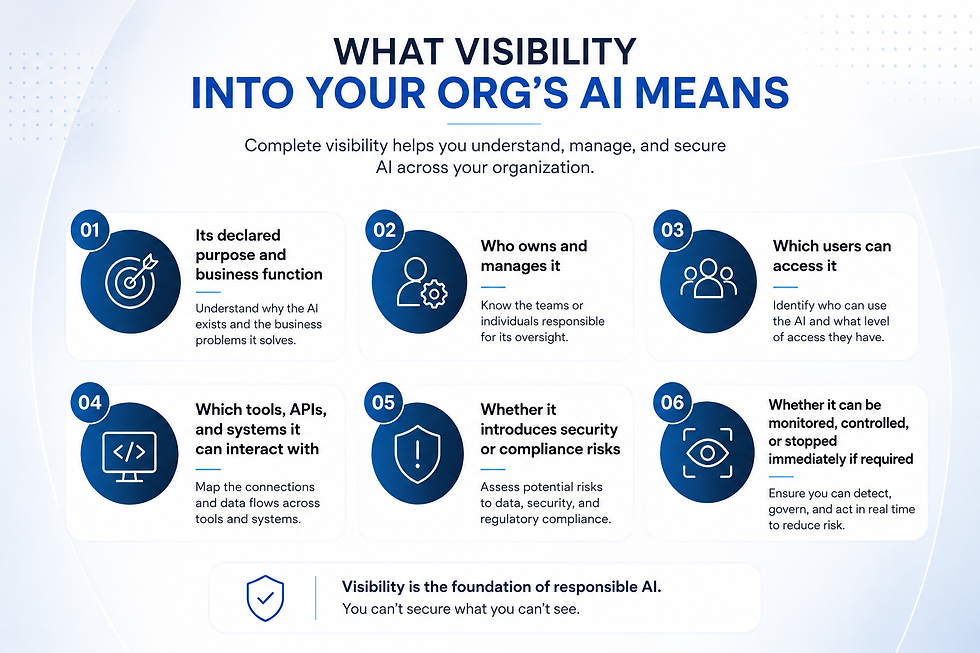
You cannot secure what you cannot see.Many organisations have limited visibility into AI tools, AI agents, and AI-enabled applications being used across their environment. This creates blind spots that can lead to data leakage, unauthorised access, compliance violations, and new attack paths.
AI Security Frameworks and Guidelines
Organizations can leverage the OWASP Top 10 for Large Language Model Applications to address common AI security risks and the NIST AI Risk Management Framework (AI RMF) to manage and govern AI-related risks. Clear AI usage policies should also cover approved tools, sensitive information, access controls, human review, vendor usage, data retention, and employee responsibilities.
Conclusion: Securing AI for the Future
AI improves productivity and automation but also introduces new security risks. With strong controls, monitoring, governance, and AI security frameworks, organizations can adopt AI safely. Cyint Technologies helps organizations achieve this through AI Security & Governance, Security Assessment, Continuous Monitoring, and Cybersecurity services.


